Recognise
Research covers possible reference subjects and observable features. Identity, source scope and recognition limits still need review.

Pocket Ecologist · Online investigation
Pocket Ecologist is the principal Online ecological investigation and play environment of NZ Ex Games. Explore species, habitats, threats and relationships through real Field material and shared ecological knowledge.
Start with a place, examine what has been observed and investigate a question. Connect sources and interpretations while keeping what is known distinct from what needs evidence.
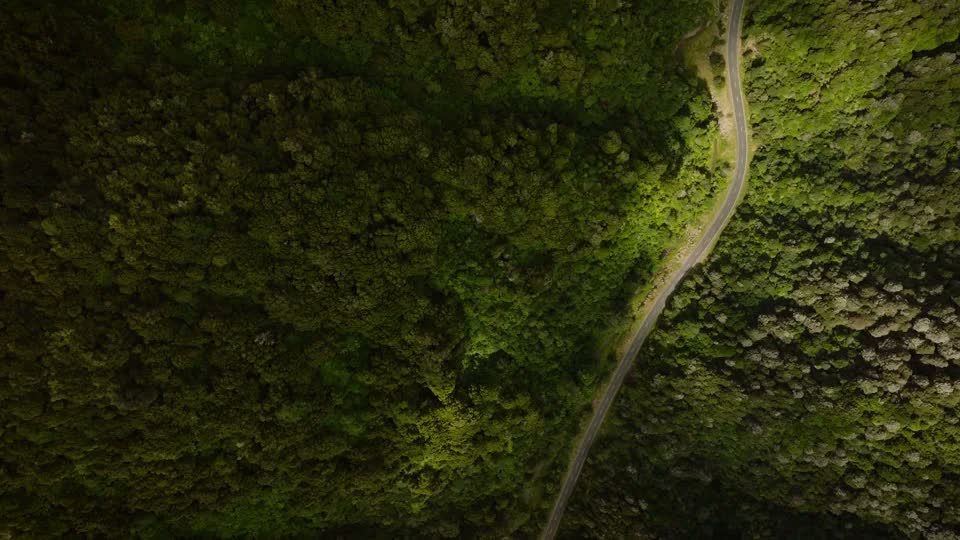
Native forest canopy: habitat context for investigating ecological relationships. Cropped source imagery, not an NZ Ex Games result.
Te Urewera
Photo: Frank Productions / Science for Technological Innovation National Science Challenge. Source: Robots in the wild · CC BY-SA 4.0; adapted image under the same licence.
Explore a 360° illustrative forest, arrange independent objects and save your own private builds. The imagery is illustrative, including AI-generated forms; it is not Field evidence or a record of actual species occurrence.
Open your 360° worldUse your existing NZ Ex Games sign-in. Active participation is required to edit and save.
Browse 23 proposed environments, explore their shared starter platform and discover attributed reference images. Content gaps invite further investigation and reviewed Field contributions.
Browse environments and the public image libraryPocket Ecologist ↔ Mission ↔ Field
A Mission connects a question or knowledge gap with the work needed to answer it: why it matters, what is known, what needs finding out and what evidence would help. Work can be Online, in Field, or both. Reciprocal requests and contribution review describe the intended participation model. The available Mission exercises save work on this device; they do not send requests or deliver contributions for review.
An investigation in PE can reveal missing evidence. A Mission frames the observation or material needed; Field participants determine how to respond. The returned observation and its interpretation need review before strengthening shared knowledge in PE.
An unfamiliar sign, an identification problem or a change in a place can begin a Mission. Online participants research sources, compare interpretations and identify gaps. Reviewed knowledge returns to the Field question and shared ecology, or identifies what to examine next.
Hunt is a Mission mode: find the species, sign, evidence or occurrence. Other Missions may be answered through Online research alone. Field and Online participation share the question; neither replaces the other's judgement or contribution.
The aim is one shared, scientifically defensible ecological model: the best knowledge supported by authorised Field material, reviewed observations and validated, appropriately sourced contributions. Place, habitat, species, relationships, threats, interventions, condition and change belong to that real ecology.
The illustrative 360° build tools above support private exploration. The future evidence-connected environment will reflect a player’s exploration, connections and questions, not a different version of scientific truth. The shared model can remain incomplete or uncertain; unknowns must not be invented to fill it.
Field participants act in actual New Zealand environments. Their records can show what is there, what they find and do, conditions and change over time. Not every record is verified Evidence.
Authorised Field material can ground shared sources and ecological knowledge. Future personal builds would let players construct their own environments around that knowledge, bringing together material and exploring connections. A personal identification is not automatically a shared fact.
Field material is a starting point, not the limit. Players can investigate other legitimate sources. A useful discovery may become a candidate contribution; only appropriate review and validation can enrich shared ecological knowledge, which may in turn inform player builds.
Sources and review give a contribution its evidentiary standing. Building or sharing a personal environment does not itself validate its contents.
Enrichment may draw on local knowledge or lore, species and restoration knowledge, historical observations, imagery, audio, maps, published research, agency information and monitoring. Players may propose relationships, identifications, questions or hypotheses, and identify information gaps.
Citation and linking identify a source; they do not grant permission to copy it. Licensing, permission and reuse need their own consideration. Material must retain its source and context wherever supported; an external source or local account does not become verified fact simply by inclusion.
Media and Field material may contain observations or document Action; they are not automatically accepted Evidence. Player identification and interpretation remain distinct from the report, question or hypothesis. Unknown, uncertain, proposed, conflicting and validated information need to remain distinguishable; scientific defensibility includes acknowledging unresolved questions. Building PE does not itself establish a verified Result or ecological Impact.
Scientific reference knowledge, Field material, local knowledge and culturally held knowledge retain their own provenance and context. Mātauranga Māori and other iwi/hapū knowledge are not fantasy by default; authority, permissions and appropriate presentation must be respected.
Personal presentation must leave the shared ecological base unchanged. Fictional interpretation is distinct from culturally sourced knowledge and cannot become scientific fact through a player build.
A personal PE environment should use the approved public representation of a place. A detailed ecological model does not require the player to receive protected source coordinates.
Precise Field locations can support authorised internal association, review and comparisons over time. Public precision is a separate decision, respecting ecological sensitivity, privacy, cultural authority and land access. Source coordinates must be preserved internally, not degraded to create a public view.
Approved public reference geography, such as named locality or reserve boundaries, is different from protected locations attached to Field material. The boundary is: precisely located internally, appropriately located publicly. Use only the location detail authorised for public sharing.
Online investigation can identify a gap that needs Field observation; a Field question can call for Online research or interpretation. Missions connect the required work in either direction. Reviewed observations and evidence can return to PE knowledge or identify another question.
Documentary observation context
Existing authorised photographs show native forest habitat and flowering for ecological observation and investigation. They are not PE captures, NZ Ex Games activity, regeneration evidence or ecological results. No DOC endorsement is implied.
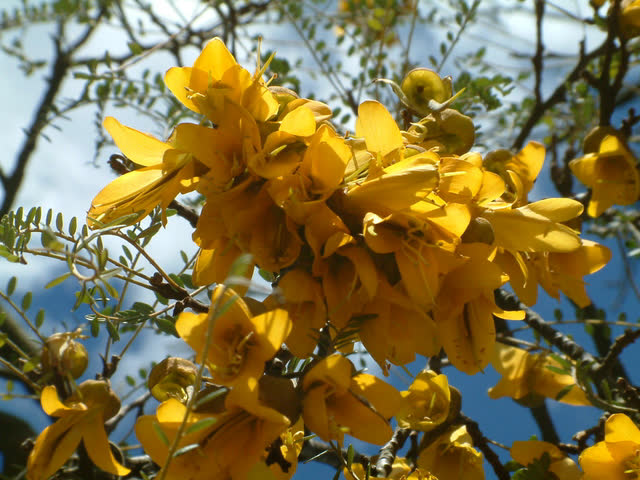
Kōwhai flowers, Southland. A separately sourced view of native flowering. Resized; full source frame retained.
Southland; a separate location from the forest pictured above
Photo: Kiri Pullen / Source: Department of Conservation (NZ). Source: Department of Conservation · CC BY 4.0.
Open a concept to explore how a place, observation, question and evidence connect. Begin with the part that helps your investigation.
Where was it noticed? Place gives an observation context; a map location does not give access to the land.
What are you looking at? Existing subjects or Targets can be referenced. An unknown identity can remain unknown.
What was seen, heard or measured? Describe the sign separately from what you think caused it.
What might it mean? Keep your interpretation separate from the original report and any proposed identification.
An observation or a genuine knowledge gap can give rise to a question. Its source remains attached.
A Mission connects a question with the sources, evidence and work needed to answer it. Hunt is a Mission mode for finding a thing, sign, occurrence or evidence.
Some questions need source research; others need observations in the field. What would help answer the question must be stated, with its limits.
The aim is to understand ecological condition and change. A new observation or an open question is not, by itself, a verified result.
An observation needs its recorder, time, source media and revisions. Confirmation records who stands behind a report; it does not verify its ecological interpretation. A sign is something to describe and investigate, not an automatic diagnosis.
Research questions
The current research work considers plant and fauna recognition, seedlings, leaf damage, flowering and fruiting, and ecological processes. These are topics under review, not a published field pack or accepted indicators of regeneration.
Research covers possible reference subjects and observable features. Identity, source scope and recognition limits still need review.
A visible sign alone does not establish its cause, native identity, recovery or ecosystem health.
Sources, repeat observations, context and appropriate review would be needed to support a claim about condition or change.
These forest topics are research questions. Sources, species identification and proposed signs of regeneration require review before they can support ecological conclusions. This overview is not a validated field guide.
Explore Map and Hit List reference material and try Mission exercises, including Hunt mode, with progress saved on this device. Personal PE build tools, media upload and contribution submission are unavailable here. You can investigate and learn without being a competitor.